


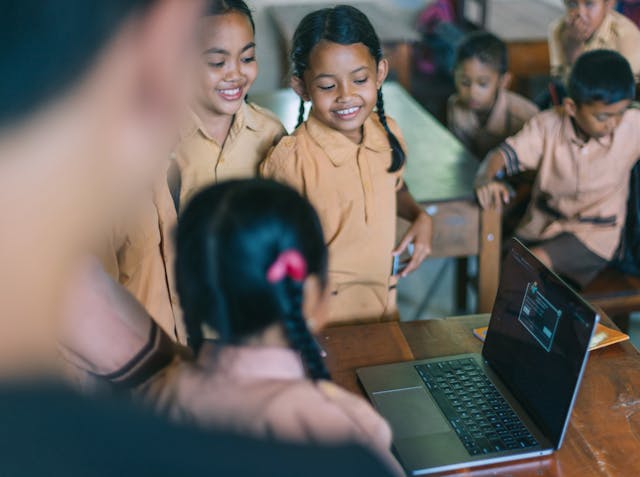
India’s digital revolution has gone far beyond connectivity and governance—it is now reshaping the country’s education system. Under the Digital India mission, technology is being used to make learning more accessible, inclusive, and effective, especially for students in remote and underserved areas.
From online classrooms to digital teacher training, India is steadily building a technology-driven education ecosystem that supports both learners and educators.
1. Expanding Access to Education Through Technology
One of the biggest achievements of Digital India in education is bridging the access gap:
-
Students in rural and remote areas can now access learning materials through smartphones, television, and the internet.
-
Digital platforms have reduced dependence on physical infrastructure, making education available anytime and anywhere.
-
Government initiatives ensure that even students without internet access can learn through multi-mode delivery systems like TV and radio.
This has made education more inclusive, especially for economically weaker sections.
2. PM eVIDYA: Multi-Platform Learning for All
The PM eVIDYA programme is a flagship initiative designed to provide integrated digital education:
-
Combines online learning, TV channels, radio, and podcasts
-
Dedicated DTH channels (One Class, One Channel) for different grades
-
Accessible to students without smartphones or internet connectivity
-
Supports both school and higher education
This initiative proved especially crucial during disruptions like the pandemic and continues to support hybrid learning models.
3. DIKSHA: India’s Digital Learning Backbone
The DIKSHA (Digital Infrastructure for Knowledge Sharing) platform has emerged as one of the world’s largest digital education ecosystems:
-
Offers e-content, textbooks, videos, quizzes, and assessments
-
Supports multiple languages, making it accessible across states
-
Used by students, teachers, and education administrators
-
Has recorded billions of learning sessions, reflecting widespread adoption
DIKSHA is not just a content platform—it is a complete digital learning infrastructure supporting India’s education system.
4. Teacher Training and Capacity Building
Digital India also focuses on improving the quality of teaching:
-
Programmes like NISHTHA (National Initiative for School Heads’ and Teachers’ Holistic Advancement) train teachers through online modules
-
Millions of teachers are being trained in digital pedagogy and modern teaching methods
-
Teachers can access updated resources and training materials anytime
This ensures that educators are equipped to handle digital classrooms effectively.
5. Digital Literacy Through PMGDISHA
The Pradhan Mantri Gramin Digital Saksharta Abhiyaan (PMGDISHA) plays a key role in education at the grassroots level:
-
Aims to make rural households digitally literate
-
Trains individuals to use computers, smartphones, and the internet
-
Enables parents and students to participate in digital learning
By improving digital literacy, the programme strengthens the foundation for a digitally educated society.
6. Online Higher Education and Skill Development
Digital India has expanded opportunities beyond school education:
-
Growth of online courses, virtual classrooms, and e-learning platforms
-
Increased focus on skill development and vocational training
-
Support for emerging fields such as AI, data science, and digital technologies
Students can now access global-quality education and skill training without leaving their homes.
7. Role of Connectivity and Infrastructure
Education reforms under Digital India are supported by strong digital infrastructure:
-
BharatNet is connecting rural schools and institutions with high-speed internet
-
Expansion of mobile connectivity ensures access even in remote areas
-
Public Wi-Fi hotspots and Common Service Centres (CSCs) act as local learning hubs
This infrastructure is essential for ensuring that digital education reaches every corner of the country.
8. Emerging Initiatives in Digital Education
India is now moving toward the next phase of digital learning with new initiatives:
-
Artificial Intelligence (AI) in education for personalised learning experiences
-
Virtual labs and simulations for science and technical subjects
-
Digital universities to provide flexible and online degree programmes
-
Increased use of interactive and gamified learning tools
These innovations are making education more engaging and future-ready.
9. Challenges and the Way Forward
Despite strong progress, some challenges remain:
-
Digital divide in terms of devices and connectivity
-
Need for continuous teacher training
-
Ensuring quality and standardisation of digital content
Addressing these issues will be crucial for making digital education truly inclusive and effective.
Conclusion
Digital India is transforming education into a more accessible, flexible, and inclusive system. By combining technology with policy support, the country is building a future where learning is not limited by location or resources.
As digital tools continue to evolve, India’s education system is moving toward a model that is student-centric, technology-driven, and globally competitive. The journey is ongoing, but the direction is clear—education in India is becoming more connected, empowered, and ready for the future.