


Hyderabad, Mar 17: Building on its commitment to early detection and prevention of kidney diseases, the Asian Institute of Nephrology and Urology (AINU), launched its Mobile Kidney Screening Initiative last year on World Kidney Day 2025, aimed at bringing essential kidney health screening closer to communities. Since its launch, the initiative has screened over 10,368 individuals, expanding access to early kidney health checks and enabling timely detection of chronic kidney disease (CKD). Continuing this mission in 2026, AINU’s Community Kidney Health Initiative has also generated valuable insights from these screenings, highlighting the growing importance of preventive kidney care and community awareness.
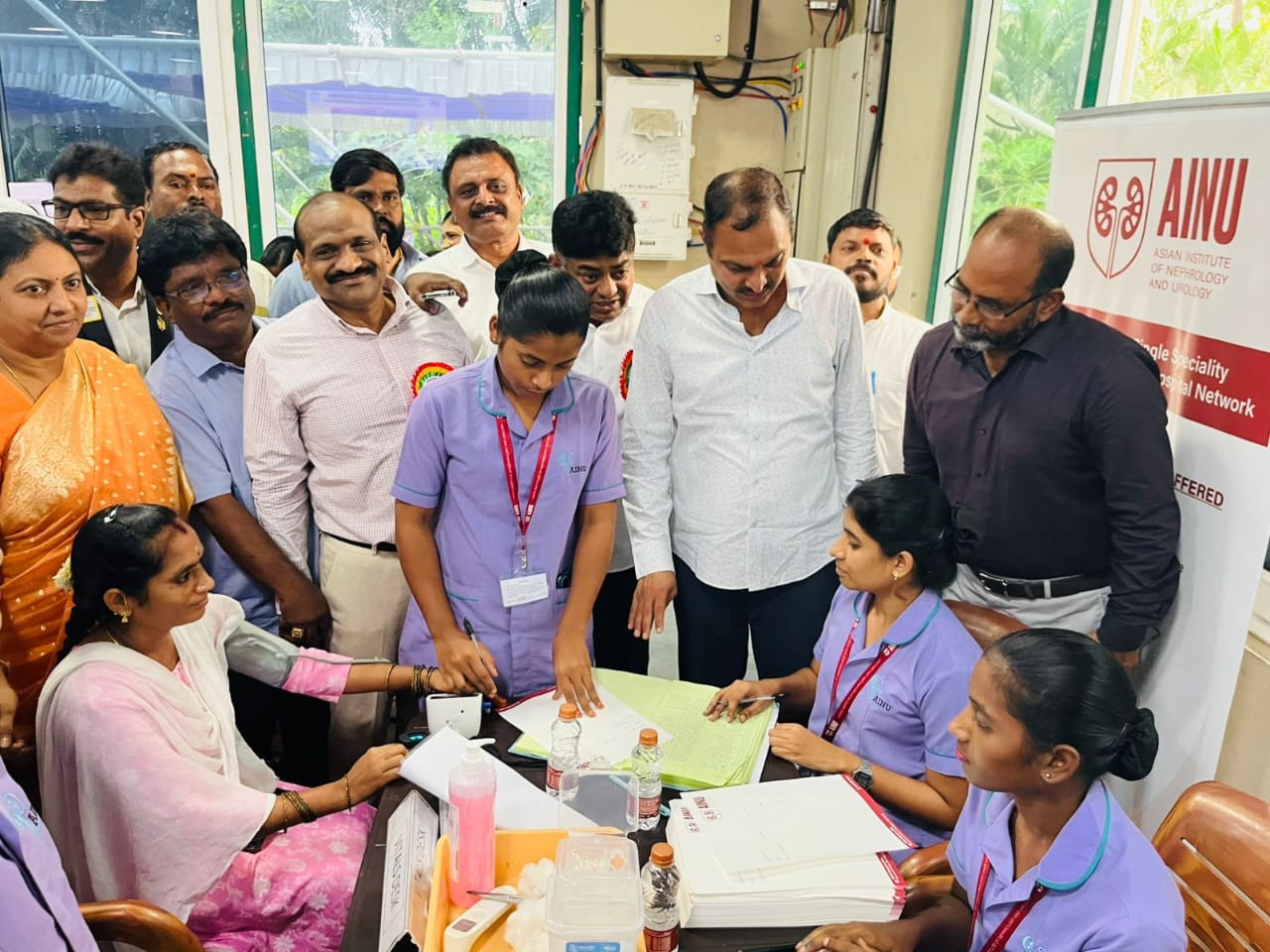
Through this community outreach effort, AINU has screened 10,368 individuals so far, making it one of the largest community-level kidney health screening initiatives in the state. The programme was designed to identify early markers of kidney disease, understand the prevalence of associated risk factors such as hypertension, and assess the broader relationship between kidney health and lifestyle patterns.
The screening initiative focused on young and middle-aged adults, an age group that is often not routinely screened for kidney disease but may already carry risk factors such as high blood pressure, obesity, or unhealthy lifestyles.
Profile of the Screening Population
The analysis of the 10,368 participants revealed a diverse demographic profile with a relatively young average age.
Total participants screened: 10,368
The participants had a mean age of 39.06 years, with 66% male and 34% female representation, reflecting a balanced gender participation in the initiative.
A key observation from the screening programme was the significant representation of younger adults:
58.9% of participants were between the ages of 21 and 40 years, indicating that kidney health risks are increasingly relevant among the younger population. This demographic profile highlights the importance of preventive screening even among individuals who may not yet show symptoms of kidney disease.
Key AINU Observation from the Screening
The large dataset generated from the community screening has revealed several important indicators related to kidney health.
Hypertension Prevalence
One of the most significant findings was the prevalence of high blood pressure among participants.24.01% of the screened population had hypertension, meaning nearly one in four individuals had elevated blood pressure levels.
Hypertension is widely recognized as one of the leading causes of chronic kidney disease, as prolonged high blood pressure can damage the delicate blood vessels in the kidneys, gradually impairing their ability to filter waste from the blood.
Advanced CKD Stage Distribution
The screening also revealed that identified individuals were already in advanced stages of chronic kidney disease, with 2.46% in Stage 3, 0.33% in Stage 4, and 0.07% in Stage 5 CKD. These numbers highlight that although advanced stages are relatively less common in the community, a measurable number of individuals are already living with significant kidney impairment without prior diagnosis. Early identification through such screening programmes allows these individuals to receive timely medical evaluation and treatment, potentially slowing disease progression.
Importance of Early Screening and Awareness
Chronic Kidney Disease is often referred to as a “silent disease” because symptoms may not appear until the condition has significantly progressed.
Community-based screening programmes play a critical role in:
• Detecting kidney disease at early stages
• Identifying risk factors such as hypertension and diabetes
• Increasing public awareness about kidney health
• Encouraging individuals to adopt healthier lifestyles
Early diagnosis allows doctors to implement treatments and lifestyle changes that can delay or even prevent progression to kidney failure, which otherwise may require dialysis or kidney transplantation.
Chronic Kidney Disease (CKD) is increasingly being driven by lifestyle and occupational factors among the working population. Sedentary work routines, unhealthy dietary habits, high salt intake, inadequate hydration, and rising cases of uncontrolled diabetes and hypertension are major contributors to declining kidney health. In addition, occupational stress, irregular work patterns, and frequent use of over-the-counter painkillers further increase the risk, while limited access to preventive health screening often leads to delayed diagnosis.
Recent studies indicate that CKD prevalence in Telangana has nearly doubled over the past decade, rising from around 3–4% earlier to about 7.4% of adults today.
Preventing Chronic Kidney Disease
The encouraging news is that many cases of CKD can be prevented or delayed through simple lifestyle measures.
• Medical experts emphasize the importance of the following preventive steps:
• Regular monitoring of blood pressure
• Reducing salt intake in daily diet
• Maintaining a healthy body weight
• Engaging in regular physical activity
• Avoiding tobacco consumption
• For individuals who already have hypertension, timely treatment and periodic kidney function tests are essential to detect early signs of kidney damage.
Adopting these preventive measures can significantly reduce the risk of kidney disease and improve long-term health outcomes
