


DCAL at IIM Bangalore hosted the 8th annual Women in Data Science (WiDS) India Conference 2026
Keynote address by Chisoo Lyons, Executive Director of WiDS Worldwide
14 March, 2026, Bengaluru: The Data Centre and Analytics Lab (DCAL) at IIM Bangalore hosted the 8th edition of the Women in Data Science (WiDS) India Conference at the IIMB Auditorium. Presented by WiDS Worldwide, the conference brought together leading voices across AI, machine learning, data science, and analytics, with a shared focus on responsible technology, inclusive leadership, and practical impact.
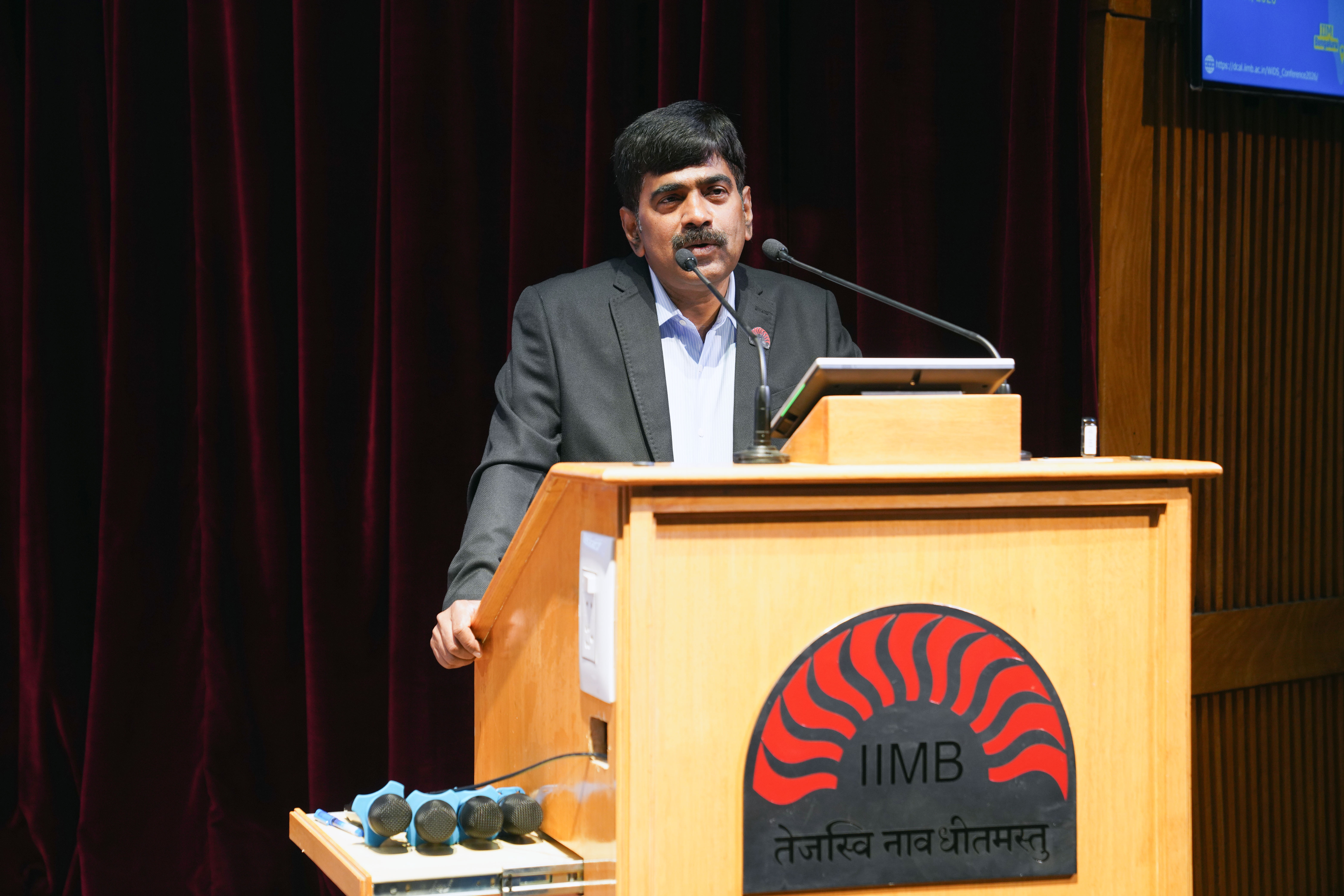
The conference opened with remarks by Prof. U. Dinesh Kumar, Director-in-charge, Chairperson, DCAL and Faculty in the Decision Sciences area at IIMB, who emphasized that the success of AI applications depends fundamentally on data integrity and well-framed problem statements. His core message was that, when building AI applications, data integrity and purposeful questioning are non-negotiable, and only with both can AI create genuine social impact.
Keynote
In the keynote address, Chisoo Lyons, Executive Director of WiDS Worldwide, highlighted India’s role as the leading contributor to the global WiDS movement outside the United States, with over 111 events across multiple cities, making India the natural choice as WiDS’s first international expansion. She highlighted the breadth of the global community: 60,000 members, 150,000 participants, and activities spanning 163 countries.
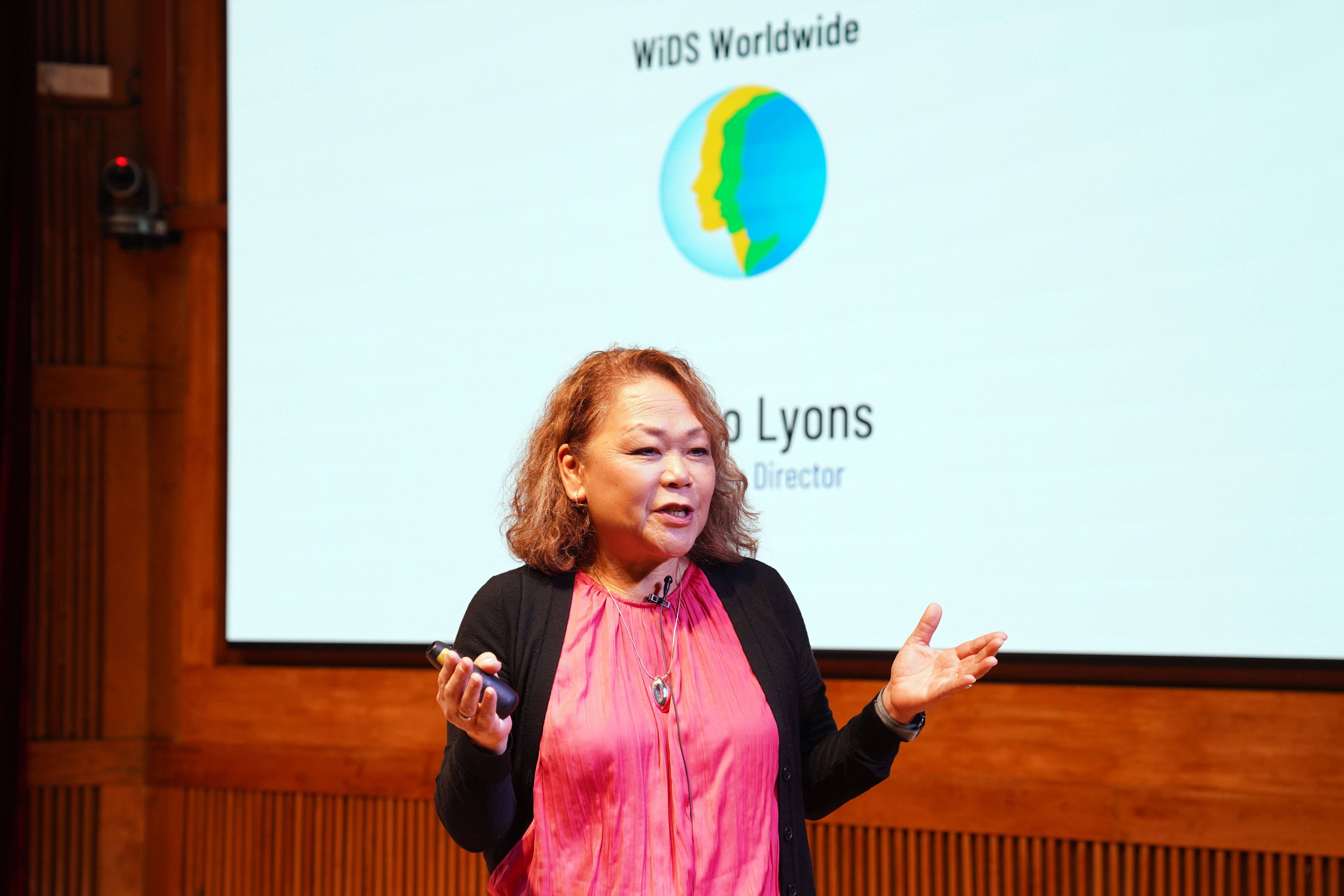
Introducing the WiDS Human Edge curriculum, Lyons offered a powerful reframe of the AI era: “It’s not human in the loop; it’s humans in the lead.” She closed on a personal note, sharing her experience of growing up raised to be invisible, and how she had to unlearn silence to step into leadership. She urged every woman in the room to resist the instinct to hold back and embrace pioneering roles in the AI era, with the WiDS community firmly behind them.
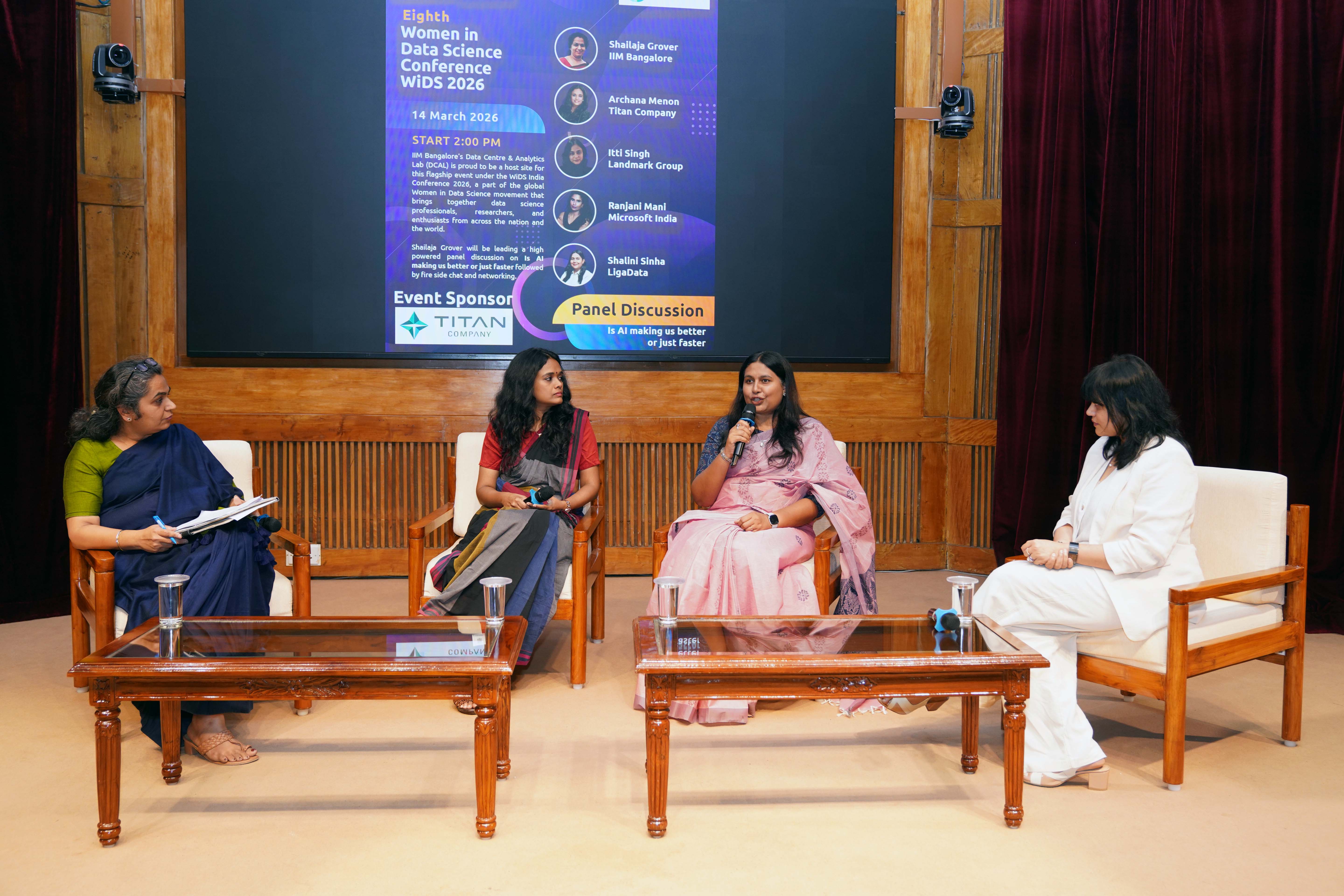
Panel Discussion: Is AI Making Us Better or Just Faster?
A panel discussion titled ‘Is AI Making Us Better or Just Faster?’, moderated by Shailaja Grover, IIM Bangalore, brought together Archana Menon, Analytics Head, Titan Company, Shalini Sinha, Senior Director, LigaData, and Itti Singh,VP – Head of Analytics & Data Science, Landmark Group.
Archana Menon argued that AI’s true value lies not in productivity gains alone, but in what leaders choose to do with the time and capacity it creates, framing impact through decision quality and bandwidth. Itti Singh grounded the conversation in business reality, noting that every vertical has a north star metric and AI adoption is best started with repetitive, high-frequency decisions. Shalini Sinha, highlighting that GenAI adoption is tracked through quarterly and monthly reviews, measuring new R&D ventures, diversification, and talent impact, with the real differentiator being whether AI enables teams to take on challenges they simply couldn’t before.
All three panellists agreed that organisations are currently in a ‘pilotisation phase,’ under CXO pressure to show results fast, but cautioned that critical thinking, domain expertise, and problem-framing remain irreplaceable human skills. The panel closed on a forward-looking note that the definition of a top performer is evolving toward someone who can orchestrate AI tools, communicate insights clearly to business stakeholders, and continuously adapt in a rapidly shifting landscape.
TECHNOLOGY VISION TALKS
In the session ‘Moving Beyond Reactive Machine Learning’, Subarna Roy, Chief Data Scientist, IBM, examined the Free Energy Principle as a foundation for designing proactive AI systems that continuously predict and update their internal models through active inference. Antra, Assistant Professor, Masters’ Union, presented ‘AI-Driven Prediction of IVF Success’, introducing a machine learning model trained on 7,355 patient records from Indira IVF to estimate IVF success probabilities using Explainable AI. In ‘Preventing Online Scams in the Age of AI’, Urvashi Kapoor, Senior Editor and AGM, Jagran Media, drew on investigations from Jagran’s Unscammed initiative to illustrate the growing sophistication of AI-enabled fraud and highlighted the need for stronger safeguards and AI-powered detection systems.
Focusing on practical AI applications, ‘Building Shakti: An AI-Powered Mentoring Platform for Women in Data & AI’ was presented by Sowmya Moni, Strategic Advisor and Investor, who introduced a not-for-profit mentoring platform supporting women pursuing careers in data science and AI, particularly from Tier 2 and Tier 3 cities. In ‘Pocket Agents: Building AI That Actually Helps’, Harini Shekar, Director – AI/Applied ML & Data Science, of PayPal, demonstrated how small, purpose-built AI systems can solve everyday problems using large language models and prompt optimisation tools such as DSPy. Addressing organisational realities in ‘Managing CXO Expectations Around AI, Data Science and Analytics’, Susmita Kundu, Former Head of Decision Sciences, of Glance.ai, emphasised that aligning leadership expectations with data science capabilities requires starting with available data, iterating quickly, and embedding analytics teams within business units.
Industry perspectives highlighted how AI adoption is evolving at scale. In ‘Beyond the Algorithm: Data Science in the Age of AI — Lessons from Titan’, Archana Menon, Analytics Head, Watches Division, of Titan Company, traced Titan’s AI journey from analytics-led systems to GenAI-enabled decision platforms, noting that the role of the data scientist is shifting from model builder to AI orchestrator. In ‘The Joy of AI at Scale: Stories from a Billion Transactions’, Maneet Singh, Vice President, Data Science – AI Garage, of Mastercard, emphasised the importance of comprehensive evaluation metrics when deploying AI at scale, observing that “no single metric captures the full picture.” Concluding the session, ‘Real Estate and Construction: Possibilities for Building with Data’ by Shobha Regunathan, Founder, The Build Ed, and Governing Council Member, WiREnet World, examined how analytics can transform the construction sector through improved planning, risk prediction, and site monitoring, while stressing the importance of clearly defined use cases and stakeholder alignment.
