


India’s dam safety architecture is entering a more technology-driven phase as the government moves to integrate artificial intelligence, digital mapping and centralised data systems into dam monitoring and risk management.
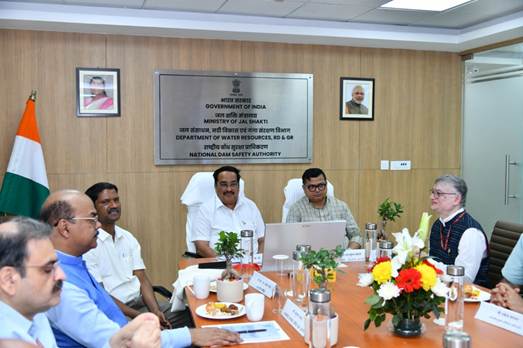
Union Jal Shakti Minister C. R. Patil recently inaugurated the new office of the National Dam Safety Authority (NDSA) in New Delhi while launching several digital initiatives aimed at strengthening dam safety governance. The event signals a broader shift in how India plans to monitor and manage its vast dam infrastructure.
Managing one of the world’s largest dam networks
India has one of the largest dam networks in the world, with thousands of major and medium dams spread across different river basins. Monitoring their structural health, safety compliance and operational risks requires constant inspection and data analysis.
The Dam Safety Act, 2021 created the NDSA as a national regulatory authority to ensure uniform safety standards and coordination between states and central agencies. Since many dams are owned by state governments, effective data sharing and oversight have been a key challenge.
The latest digital tools launched by the ministry aim to address this gap by making dam safety information more accessible and easier to analyse.
AI enters dam safety monitoring
One of the most notable initiatives unveiled during the event is NETRA (NDSA Engine for Tracking and Review using AI). The platform provides a conversational interface that allows officials to quickly retrieve information from regulations, safety guidelines and technical documents.
NETRA is integrated with DHARMA, a national repository containing data on more than 6,600 specified dams along with thousands of inspection reports.
Every year, over 13,000 inspection reports are generated during pre-monsoon and post-monsoon dam inspections. The use of artificial intelligence could help authorities quickly analyse these large datasets, identify emerging risks and improve decision-making during critical periods such as heavy rainfall or flooding.
The platform has been developed in collaboration with the Weapons and Electronics Systems Engineering Establishment, highlighting increasing cross-sector cooperation in technology development.
Digital mapping for risk assessment
Another major initiative launched at the event is Rashtriya Bandh Suraksha Darpan, a visualisation platform developed with the help of the Centre for Development of Advanced Computing.
The system focuses on Dam Break Analysis, a critical exercise used to model potential flooding scenarios if a dam fails or experiences structural distress.
By creating interactive digital maps and visual models of possible dam break scenarios, authorities can better understand downstream risks, plan evacuation strategies and improve disaster preparedness.
Such tools are particularly important in densely populated river basins where dam failures could have serious human and economic consequences.
Transparency and public access to dam data
Alongside these technical platforms, the ministry also launched a new NDSA website that includes a GIS-based interface displaying information about major dams across India.
The map-based system allows users to explore key features and locations of specified dams, reflecting an effort to improve transparency and accessibility of dam safety information.
Publicly available data can also help researchers, disaster management agencies and local administrations better understand regional water infrastructure and risk patterns.
Linking infrastructure with sustainability
The event also included the remote inauguration of rooftop solar plants installed across seven buildings of the Central Water Commission. Although small in scale, the initiative reflects a broader push to integrate renewable energy into government infrastructure.
Together, the digital initiatives and infrastructure upgrades signal an evolving approach to dam governance in India. Instead of relying primarily on manual inspections and fragmented data systems, authorities are gradually building an integrated digital ecosystem for monitoring dam health and managing water infrastructure risks.
The larger governance challenge
For a country with a large and ageing dam network, improving safety oversight is becoming increasingly important. Many dams were built decades ago, and climate change is altering rainfall patterns, raising concerns about extreme floods and reservoir management.
Technology alone cannot address all these challenges. However, tools such as AI-assisted data analysis, GIS mapping and centralised databases can help regulators identify vulnerabilities earlier and coordinate responses more effectively.
The launch of these digital platforms suggests that India is beginning to move toward a more modern, data-driven framework for dam safety governance, where infrastructure monitoring, risk modelling and policy oversight are increasingly interconnected.