


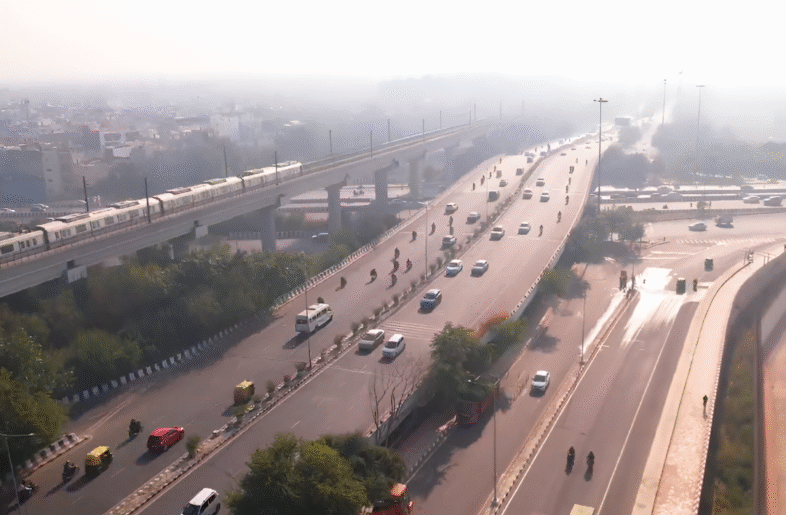
India has taken another decisive step toward strengthening its infrastructure backbone. Union Finance Minister Smt. Nirmala Sitharaman has launched the National Monetisation Pipeline 2.0 (NMP 2.0), unveiling an ambitious roadmap to unlock ₹16.72 lakh crore through structured asset monetisation between FY 2026 and FY 2030.
More than just a funding exercise, NMP 2.0 represents a strategic shift in how India plans to finance its next phase of growth — by recycling existing public assets to build new infrastructure for a developed, self-reliant nation.
Building on the Success of NMP 1.0
The first phase of the National Monetisation Pipeline marked a significant reform milestone. With nearly 90% of its ₹6 lakh crore target achieved over four years, it demonstrated that monetising operational public assets can be both efficient and transparent.
Encouraged by these results, the government has expanded its vision. NMP 2.0 is more than 2.6 times larger than its predecessor, reflecting both confidence and ambition. The Finance Minister emphasized that lessons learned from the first phase will guide smoother execution, faster approvals, and more standardized processes in the new phase.
The goal is clear: make asset monetisation seamless, transparent, and value-enhancing for both public institutions and private investors.
A ₹16.72 Lakh Crore Vision
Over the next five years, NMP 2.0 aims to unlock an estimated ₹16.72 lakh crore in value. Of this, approximately ₹5.8 lakh crore is expected to come from private sector investment.
The pipeline covers a wide spectrum of sectors central to India’s economic engine:
-
Highways and multi-modal logistics parks
-
Railways
-
Power transmission and distribution
-
Ports and shipping
-
Coal and mining
-
Civil aviation
-
Urban infrastructure
-
Telecom
-
Petroleum and natural gas
-
Tourism and warehousing
Highways account for the largest share of the pipeline, followed closely by power, ports, and railways — sectors that form the core of India’s logistics and industrial ecosystem.
Decoding India’s Asset Monetisation Strategy
Asset monetisation does not imply selling national assets. Instead, it involves unlocking value from operational public infrastructure by granting usage rights for a defined period, securitising revenue streams, or divesting partial stakes while retaining ownership.
In simple terms, the government leverages mature assets to generate capital, which is then reinvested into new projects — without increasing fiscal pressure.
Revenue generated through monetisation flows into different channels depending on the project structure. Some proceeds go into the Consolidated Fund of India, others strengthen public sector undertakings, and certain projects generate revenues for state governments. Additionally, private investors bring in direct capital to upgrade and operate assets more efficiently.
This approach enables capital recycling — turning yesterday’s investments into tomorrow’s infrastructure.
Aligning with the Vikshit Bharat Vision
NMP 2.0 aligns closely with the broader Vikshit Bharat initiative, which seeks to accelerate infrastructure development as a foundation for sustained economic growth.
Infrastructure is no longer viewed merely as a public utility — it is seen as a growth multiplier. Efficient highways reduce logistics costs, modern ports enhance exports, upgraded railways boost industrial supply chains, and robust power networks support manufacturing expansion.
By unlocking capital tied up in operational assets, the government can channel funds into new capital expenditure projects without overburdening public finances.
A Whole-of-Government Approach
The preparation of NMP 2.0 involved extensive consultations led by NITI Aayog, along with infrastructure ministries and financial authorities. An empowered Core Group of Secretaries on Asset Monetisation will monitor implementation to ensure accountability and timely execution.
The emphasis now is on process simplification, transparency, and attracting quality private participation. Instruments such as public-private partnerships, Infrastructure Investment Trusts (InvITs), and structured concessions are expected to play a key role in execution.
The intent is not just to raise funds, but to improve asset performance, operational efficiency, and service quality for citizens.
Why NMP 2.0 Matters
India’s infrastructure demands are enormous. As the economy expands and urbanisation accelerates, the need for efficient logistics, reliable power, modern airports, and advanced telecom infrastructure continues to grow.
Traditional budgetary allocations alone cannot meet these demands. Asset monetisation offers a sustainable alternative — mobilising capital without compromising ownership.
NMP 2.0 signals policy continuity, reform confidence, and investor-friendly intent. It reflects a mature understanding that growth requires innovative financing mechanisms alongside prudent fiscal management.
The Road Ahead
With clear sectoral targets and phased implementation planned through 2030, NMP 2.0 sets the stage for one of India’s most significant infrastructure financing drives.
If executed effectively, it could:
-
Strengthen public finances
-
Enhance infrastructure quality
-
Attract long-term private investment
-
Generate employment
-
Accelerate India’s journey toward developed nation status
NMP 2.0 is not merely a financial pipeline — it is a strategic bridge connecting India’s present infrastructure assets to its future growth ambitions.
As India moves steadily toward becoming a Vikshit Bharat, asset monetisation is emerging as a key lever powering the nation’s next wave of transformation.