


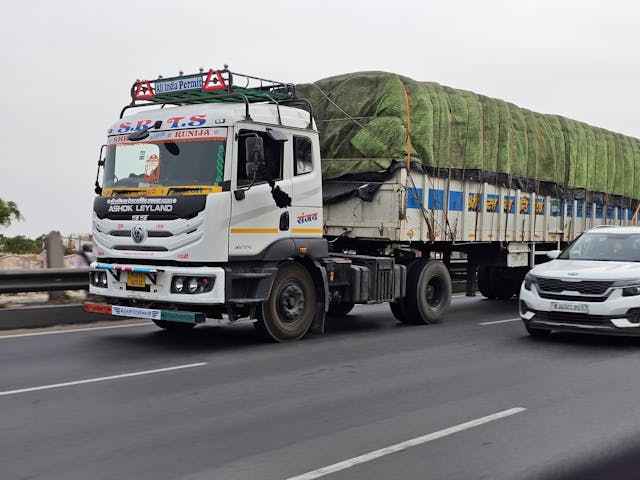
India’s commercial vehicle (CV) industry has demonstrated strong growth in FY2026, supported by policy reforms, improved freight movement, and steady economic activity.
Robust January Performance
Commercial vehicle wholesale volumes surged 27% year-on-year (YoY) in January, reaching 99,544 units, compared to 97,682 units in December 2025, reflecting a 1.9% sequential growth. The sharp annual rise was largely attributed to the reduction in the Goods and Services Tax (GST) rate from 28% to 18%, which came into effect in September 2025. The tax relief significantly lowered acquisition costs, encouraging fleet operators to advance their purchases.
Increased freight demand across sectors such as infrastructure, construction, e-commerce, and manufacturing also contributed to the higher dispatch numbers.
Segment-Wise Performance
The Medium and Heavy Commercial Vehicle (M&HCV) segment witnessed strong traction. Retail sales in this category grew 15.4% YoY in January, along with a notable 22.1% month-on-month increase, signaling improving market confidence. For the first ten months of FY2026, M&HCV retail volumes registered a 6.3% growth, reflecting a gradual strengthening of demand following the GST rate cut.
The Light Commercial Vehicle (LCV) segment also posted healthy gains. Retail volumes increased 14.9% YoY in January, while cumulative growth during the first ten months of FY2026 stood at 11.1%. Demand in this segment continues to benefit from last-mile delivery expansion driven by e-commerce and urban logistics requirements.
Overall Industry Trends
During the first ten months of FY2026 (10M FY2026), domestic CV wholesale volumes recorded an 11.3% YoY growth, while retail volumes rose by 8.5% over the same period. The improvement in retail performance suggests that end-user demand is strengthening alongside wholesale dispatches.
Industry estimates indicate that the domestic CV sector is likely to post a moderate wholesale growth of 7–9% in FY2026. Looking ahead to FY2027, growth is expected to normalize to 4–6%, reflecting a high base effect and gradual stabilization after the current recovery cycle.
Key Growth Drivers
Several structural and cyclical factors are supporting the industry’s expansion:
-
GST rate reduction improving affordability
-
Rising freight and logistics activity
-
Infrastructure and construction spending
-
Replacement demand from aging vehicle fleets
-
Growth in e-commerce and last-mile delivery
Outlook
While January’s performance highlights strong momentum, the industry is expected to shift toward steady and sustainable growth over the medium term. Continued policy support, economic stability, and infrastructure investments will remain critical in maintaining demand across both heavy and light commercial vehicle segments.